
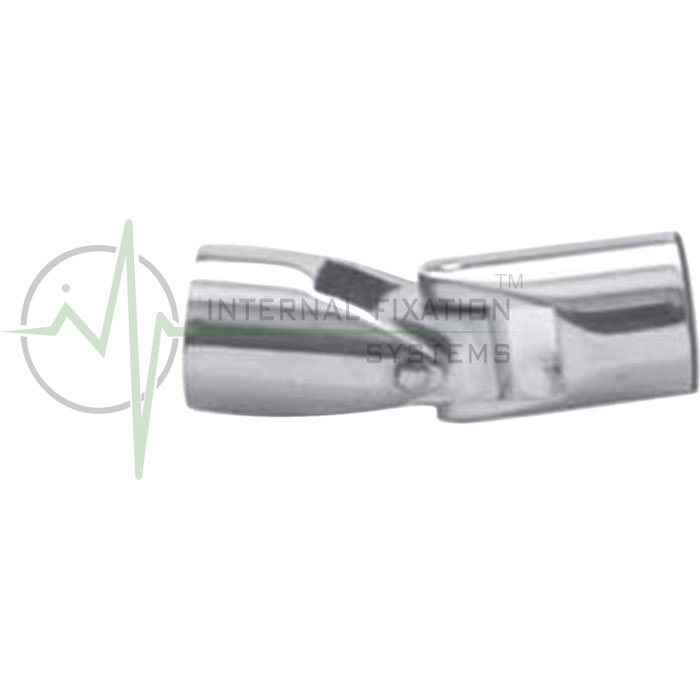


Description
A Hinge Joint (ginglymus or ginglymoid) is a bone joint wherein the articular surfaces are formed to one another in such a way as to allow movement just in one plane. As per one characterization framework they are supposed to be uniaxial (having one level of freedom). where which the distal bone takes in this movement is rarely in the very plane as that of the pivot of the proximal bone; there is generally a specific measure of deviation from the straight line during flexion.
The articular surfaces of the bones are associated areas of strength for by tendons.
The best instances of ginglymoid joints are the Interphalangeal joints of the hand and those of the foot and the joint between the humerus and ulna. The knee joints and lower leg joints are less normal, as they permit a slight level of pivot or of side-to-side development in specific places of the appendage. The knee is the biggest pivot joint in the human body.
Hinge and pivot joints are the two sorts of synovial joint. A pivot joint can be considered a changed sellar/saddle joint, with decreased movement.
Features of Hinge Joints
1. Hinge joint show similarity with hinge on a lid of a box.
2. Movement of hinge joints is in one plane i.e they can not show movement in more than one plane.
3. Formation of the hinge joint takes place by fitting the convex surface of one bone to the concave surface of another bone.
4. Movement of ball and socket joints is different from hinge joints as ball and socket joints show movement along more than one plane.
5. Hinge joints also have chances of dislocation even when they are known to be stable.
6. By maintaining a healthy diet, reducing stress, frequent movement and strengthening muscles around the joints, one can maintain a healthy hinge joint.


Reviews
There are no reviews yet.